Three Choirs Picks Earliest Harvest in 50 Years as UK Vineyards Expand
Three Choirs picked its first grapes on 20 August, the earliest in 50 years, and bottled 5,000 bottles of its 'Gloucestershire nouveau' white as UK vineyard plantings quadruple.
· 3 min at the table
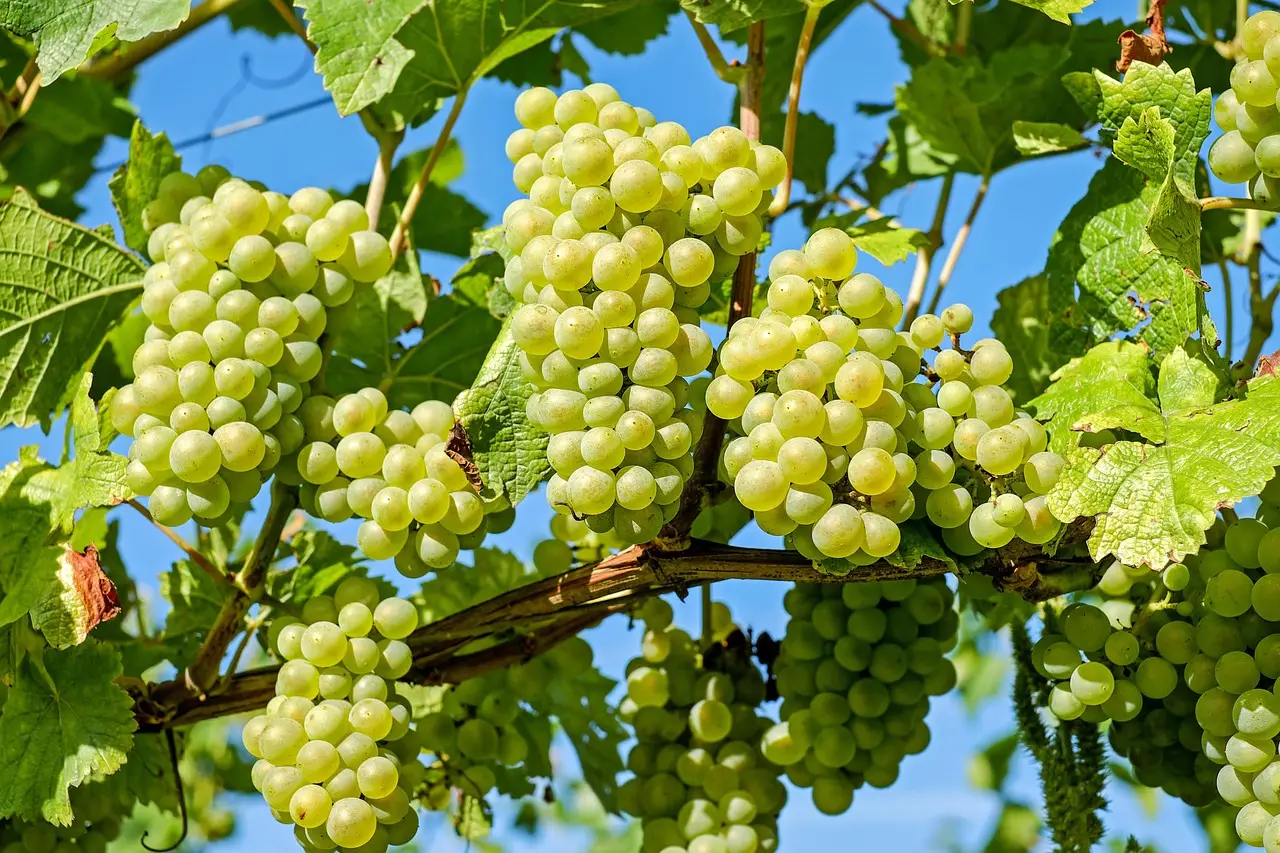
Three Choirs Vineyard near Newent, Gloucestershire, began picking grapes on 20 August — its earliest harvest in 50 years of production and a full week ahead of the previous record set in 2025. The vineyard has now bottled a 5,000-bottle run of its 2026 First Release white, marketed as "Gloucestershire nouveau" and positioned as an English answer to France's Beaujolais Nouveau tradition.
The finished harvest, closed on 9 October, delivered 200 tonnes of grapes across Three Choirs' 30 hectares (74 acres). The 2026 First Release is a dry white blending four varieties: solaris, bacchus, siegerrebe and madeleine angevine. Customers can buy it at the vineyard shop or order it in its restaurant.
How early is this harvest?
Early by a full month. In the 1980s, picking at Three Choirs began in mid-September, according to winemaking director Martin Fowke. This year's long, hot summer, with rain arriving at the right moments, pulled the start forward to 20 August. The harvest closed on 9 October.
"We now have an extra month to make the wine. We had riper raw material and longer in the winery," said Fowke, calling 2026 a "record-breaking year". He said higher sugar levels and lower acidity let winemakers produce a wine that was not possible in Britain 30 years ago.
The timing caught even Three Choirs winemaker Jack Abbotts off guard. He was on his summer break when picking started. "It's usually a safe week for me, but this year it all snowballed," he said.
What does the early harvest mean for operators?
Longer winery time and riper fruit give producers more control over style — but the heat itself brought strain. "We found it hard this year," said Fowke. "People kept saying: 'This hot weather must be good for you', but it was difficult because we knew the heat and lack of rain was challenging for farmers. We don't need it to get any warmer, that's for sure."
Three Choirs has bottled a young wine every November since the 1980s, mirroring the Beaujolais custom of releasing young wine on the third Thursday after harvest for local consumption. Vines were first planted on the Gloucestershire fruit farm site in 1973.
The operation also works as a contract winemaker, producing wine for around 40 other vineyards, including Llanerch, west of Cardiff — a revenue stream that grows as small new vineyards launch without their own production facilities.
How fast is the UK wine industry growing?
Britain now has more than 1,100 registered vineyards, with vines planted as far north as Yorkshire and Scotland. The planted vineyard area has quadrupled since the turn of the century, according to property group Knight Frank, which ranks Britain the fastest-growing wine region in the world. By volume, the UK still trails producers including Uzbekistan and Tunisia.
English and Welsh producers gathered their second-largest harvest in 2025: the equivalent of 16.5 million bottles, or 124,377 hectolitres, according to industry body WineGB.
If summers like 2026 become the norm, Three Choirs may consider new varieties — a shift Fowke frames with caution. "We can evolve and change, but we would be planting cabernet sauvignon like they did in Bordeaux 50 years ago," he said, noting the move from white to red grapes. "But that is not what we set out to do."
Pruning for the 2027 growing season has already begun in Gloucestershire. "To have two good years in a row is not uncommon, to have three is unusual," said Fowke. WineGB said in August it was "optimistic" about the 2026 harvest's size and quality; full national data arrives in early 2027.
via theguardian.com (Source)
More from Tom Whitfield
Show full bio
Senior reporter covering companies, deals and strategy in European hospitality industry at Eurotables Report.
149 articles
Other tables tonight
- Roussillon yields rise 10hl/ha in 2026, but recovery stays partialOctober 30, 2026
- Centre-Loire harvest opens 12 August as BIVC declares 2026 vintage "extraordinary"October 13, 2026
- Champagne Houses Turn to Reserve Stocks as Harvest HalvesSeptember 29, 2026
- Beaujolais Nouveau 2026 seeks revival amid 60% plot yield dropsNovember 20, 2026
- Champagne Halves as French Wine Output Drops to 33.9 Million HectolitresOctober 10, 2026