Innocent and Notpla test edible seaweed pods in Nobottle pilot
Innocent and Notpla piloted edible seaweed pods in a Northamptonshire hamlet as the edible packaging market heads for $1.84bn by 2033, but shelf life, cost and scale remain barriers.
· 3 min at the table
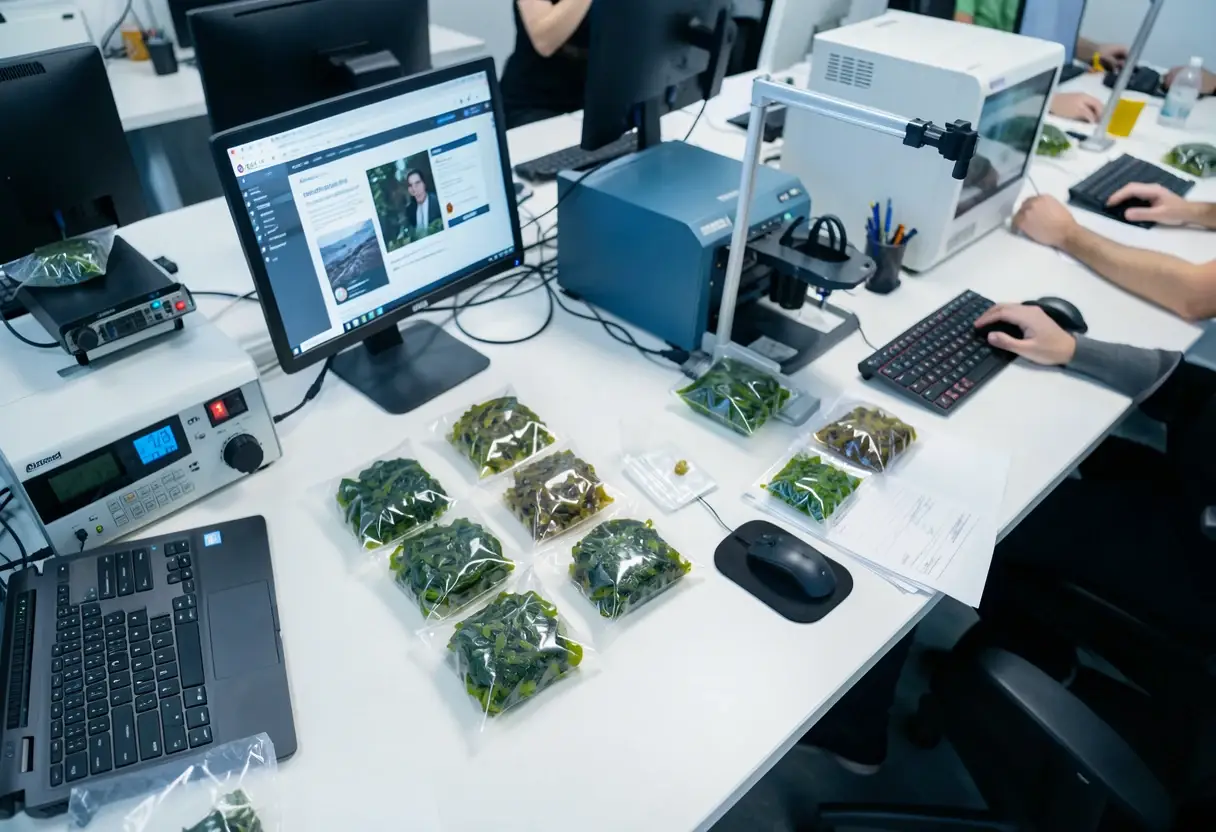
Innocent Drinks handed out ginger shots with no bottle to roughly half of the 30 or so residents of Nobottle, a Northamptonshire hamlet, in a pilot with biodegradable packaging maker Notpla last month. The drinks came in edible seaweed pods laid out on trays. Steve Anderson, 57, said: "Most people reacted really well to it." He noted the pods "were very palatable"; the only pushback concerned ginger strength, a taste preference rather than a packaging objection.
How big is the waste problem?
Global packaging waste is projected to hit 434.5 million tonnes in 2025 and rise to 525 million tonnes by 2030, a compound annual growth rate of 3.9%, according to Smithers research. Plastic waste volumes doubled between 2000 and 2019, with packaging responsible for about 40% of it. Recycling remains the weak link: the worldwide plastic recycling rate was just 27.9% in 2024. The UK performs better on plastic packaging specifically, at 52.5% in 2023, up from 51.4% in 2022.
The edible packaging market was valued at $1.04bn (£790m) in 2024 and is forecast to reach $1.84bn by 2033. Context matters: Prof James Elliott of the University of Cambridge puts the non-biodegradable plastic market at $265bn, so edible formats remain a sliver.
What did the pilot change for operators?
Andrew Wallis, packaging lead at Innocent, said 78% of surveyed consumers would consider buying ginger shots encased in seaweed. He raised a concrete application: Innocent's kids' range, which currently uses paper straws inside plastic packaging. "Could that wrap be exchanged for a seaweed wrapper?" he asked.
Shelf life is the commercial barrier. At Notpla's east London headquarters, a machine pushes ginger shots into seaweed casing like sausages on a conveyor belt, but the pod lasts only three days against weeks for an unopened bottle. Retail distribution remains unsolved. Market researchers also flag "sensitivity of edible packaging to fluctuating environmental conditions, necessitating special handling during shipping and storage", plus consumer reluctance that hinders "widespread adoption".
Who else is scaling?
Notpla built similar pods for the London Marathon and now uses seaweed for olive oil portions, sandwich packaging, plastic-film replacement in cardboard, and spoons used in London ice-cream parlours including Ice Cream Union. Co-founder Rodrigo García González said: "Some seaweed can grow up to 60cm a day." He added that around 40 million tonnes are harvested annually, almost all farmed, and already sit in products from toothpaste to ice-cream. Xampla makes edible stock-cube film and pea-protein film; Elliott praised vat-based production as a biochemical advantage. Cupffee, producing millions of edible cups patented in 14 European countries, faced manufacturing challenges. "We're making food," said Lubomila Jordanova, noting cups must hold coffee at 85C without leaking, and consistency demanded heavy investment in automation and quality control.
Can costs and scale work?
Elliott was blunt on economics. "They are very cost driven," he said of manufacturers, adding that 30-40% of all plastics go into packaging and the UK alone uses 2 million tonnes a year. His verdict on premium versus commodity: "A ginger shot is a premium product, but if you have a cabbage wrapped in film, will you pay double to wrap it in something edible?" Still, he conceded that "the more you scale up, the lower the cost will be".
Sian Sutherland, co-founder of A Plastic Planet, called edible packaging "the ultimate proof point for the safety of plastic alternatives" but said: "I don't think wrapping our food in more food is a solution for the long run." Her demand: "Government must lead and support the pioneers making this shift."
Watch for Innocent's next packaging decision on its kids' range, further retail pilots from Notpla, and whether EU and UK packaging rules tilt the cost equation.
via theguardian.com (Source)
Filed underEdible PackagingSeaweed PackagingSustainable PackagingPackaging InnovationBeverage Industry
More from Priya Raman
Show full bio
Staff writer covering companies, deals and strategy in European hospitality industry at Eurotables Report.
159 articles
Other tables tonight
- EU Opens Consultation on Bio-Based Plastics in PackagingOctober 26, 2026
- Supermarkets and hospitality warn of price rises from EU packaging rulesOctober 10, 2026
- EU Packaging Law Enters Force, Redrawing Hotel and Restaurant Procurement Through 2030October 10, 2026
- UK cuts glass EPR fees up to 40% and ends pub double chargingNovember 12, 2026
- Life Water unveils 500ml moulded-fibre bottle for commercial buyersNovember 17, 2026