Nestlé and BirdLife Europe launch biodiversity monitoring
Nestlé has signed a 3.5-year deal with BirdLife Europe to measure biodiversity on regenerative farms, with monitoring starting in Spain in 2026 after farmland bird numbers fell 58% since 1980.
· 2 min at the table
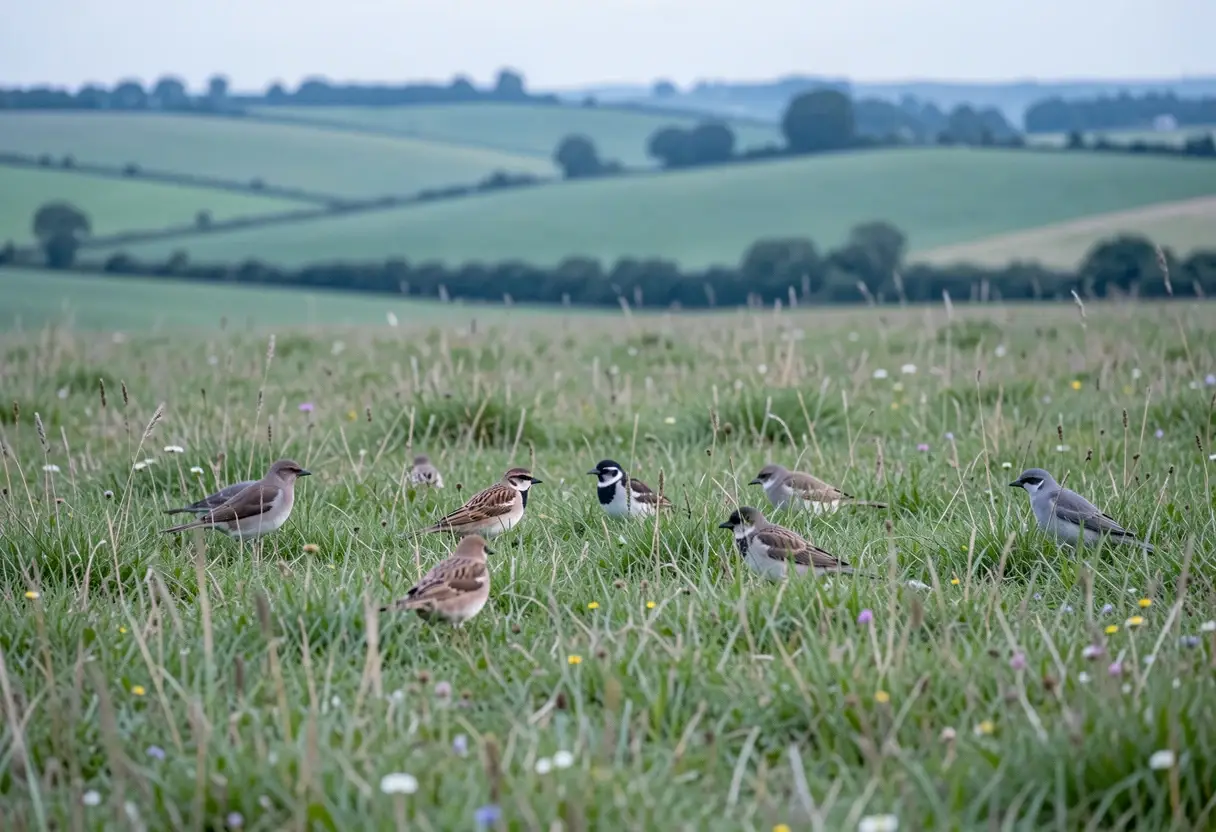
Nestlé has signed a three-and-a-half-year collaboration with BirdLife Europe to measure the biodiversity impact of regenerative agriculture, with field monitoring starting in Spain in 2026.
The science-led programme will track farmland birds, butterflies and wild bees, comparing their presence on fields under regenerative practices against conventionally managed land. Nestlé said the findings will identify which practices deliver the greatest biodiversity benefits and shape its approach to farmer support and responsible sourcing across its European supply chains.
How will the programme roll out?
Monitoring begins in Spain in 2026, building on biodiversity research Nestlé has conducted with SEO/BirdLife on dairy farms since 2021. Poland joins the programme with OTOP, the Polish BirdLife partner. Belgium follows in 2027, working with Natuurpunt and Natagora.
BirdLife's national partners will apply established survey methods on participating farms, generating comparable data over time. The structure allows Nestlé to benchmark regenerative and conventional fields within the same regions.
Why farmland birds?
The partnership responds to documented declines in European farmland biodiversity. The Pan-European Common Bird Monitoring Scheme recorded a 58% fall in farmland bird populations across Europe between 1980 and 2024, with agricultural intensification identified as the main contributing factor.
Anita Wälz, head of sustainability and corporate communications at Nestlé Zone Europe, said: "We want to back farmers with the science, the tools and the long-term commitment to help them farm in ways that aim to support nature and their businesses."
She added: "This is about learning honestly what works. Birds are one of the most trusted signals nature can give us. Together with BirdLife, we are measuring selected bird populations in participating European farming areas to help assess changes in on-farm biodiversity."
Ariel Brunner, director of BirdLife Europe and Central Asia, said intensive farming was contributing to biodiversity loss, soil depletion and increased vulnerability to climate change. He argued the food industry had an important role in supporting the transition to more sustainable agricultural practices, but stressed that robust scientific evidence was needed to determine which approaches should be prioritised.
What does this mean for operators?
For food and hospitality businesses sourcing from European farmland, the programme addresses the evidence gap behind regenerative agriculture claims. Nestlé positioned the research as a way to assess how regenerative practices contribute to more resilient food systems through soil health, water conservation, biodiversity and carbon capture, while strengthening farmers' livelihoods.
The partnership aims to show where regenerative agriculture delivers measurable environmental improvements and where farming approaches may need adapting. That evidence base matters for procurement teams facing tightening scrutiny of sustainability claims in supply chains.
Baseline data from the Spanish dairy farm research conducted with SEO/BirdLife since 2021 gives the programme a four-year foundation before the new monitoring begins.
Spain and Poland deliver the first comparable datasets from 2026, with Belgian monitoring extending coverage from 2027.
via FoodBev (Source)
More from Elena Vasquez
Show full bio
News editor covering regulation, policy and their impact on European hospitality industry at Eurotables Report.
173 articles
Other tables tonight
- Parliament Magazine: EU must overhaul food system to stay competitiveOctober 10, 2026
- EU novel-food approvals average 2.5 years; new RegLab targets the delayOctober 15, 2026
- Soil degradation could drain up to €509bn from EU's next budgetNovember 22, 2026
- Plant-Based Food Hits $6.6 Billion as Category Outgrows Trend StatusOctober 30, 2026
- European poultry sector calls for food security to be treated as securityOctober 10, 2026