ITNº 25EU Policy & Regulation
Leaked EU compromise keeps 80% free carbon allowances for industry
Leaked Irish Presidency compromise lets industry keep 80% of free ETS allowances without delivering investments, risking the EU's 2040 climate target.
· 3 min at the table
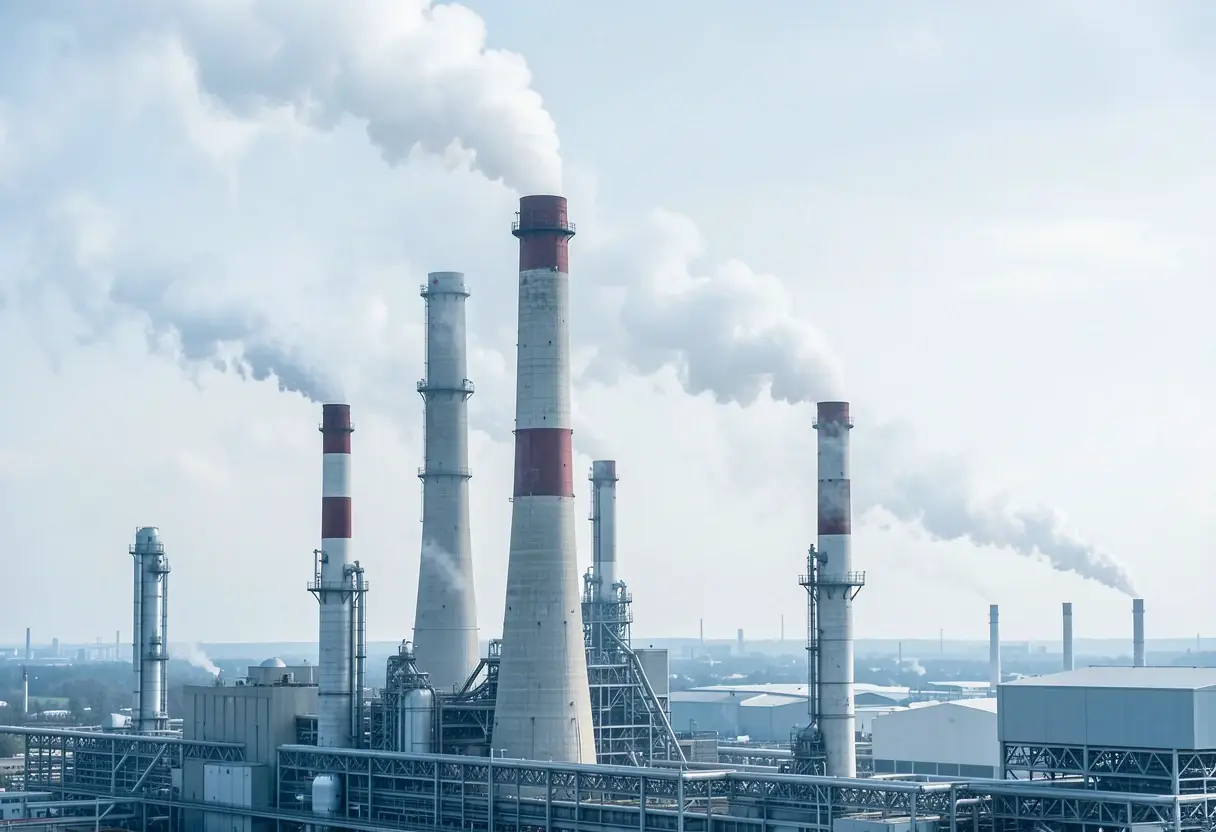
Industrial companies would keep 80% of their free carbon allowances even if they fail to deliver planned decarbonisation investments, under a leaked EU compromise that climate groups say undermines the bloc's 2040 emissions target.
The document, seen by Euronews, was prepared by the Irish Presidency of the EU Council and goes to EU ambassadors on Wednesday. It retains the European Commission's July proposal to slow the decline in carbon allowances, extend free permits for industry and admit international carbon credits into the Emissions Trading System (ETS), allowing domestic emissions to be offset through projects abroad.
The 2040 target requires at least an 85% domestic net emissions reduction, with international credits covering the remaining 5%.
What does the compromise change on free allowances?
Under the Irish Presidency's text, industrial companies retain 80% of their free allowances if they submit an investment plan — even if they never carry out the proposed decarbonisation investments. Only the remaining 20% is conditional on starting construction of eligible projects.
Free allowances are permits companies receive without buying them at auction. They exist to shield EU producers from competitors in countries with weaker climate rules, such as China and the US.
The concession protects industry from carbon costs for longer while shifting responsibility to governments to ensure that protection converts into investment in European production and clean technologies. In plain terms: the ETS may no longer price emissions hard enough to force industrial cuts.
How do international credits factor in?
The Council has retained the Commission's plan to set aside allowances equivalent to 260 million tonnes of CO2 to finance purchases of international credits. A pilot phase between 2031 and 2035 remains possible, letting the EU test the mechanism before full implementation.
The Council kept stringent quality and integrity requirements for those credits, making the ETS emissions-reduction trajectory increasingly dependent on their availability. If industries cannot buy them, the 2040 target is at risk.
Why are member states split?
A second document seen by Euronews shows EU countries divided on three fronts: how fast the permit supply should shrink, whether international credits should count toward obligations, and how far industry should be shielded from rising carbon costs.
Some capitals want permits to decline faster to raise carbon prices and accelerate fossil fuel divestment. Others fear withdrawing free allowances from struggling industries competing with Chinese and US manufacturers. A slower reduction would ease pressure on power plants and factories and temper carbon prices — but deliver fewer cuts in ETS sectors.
What do environmental groups say?
An analysis by the Öko-Institut, commissioned by WWF Germany, warned the Commission's reform is "incompatible" with the EU target of cutting net emissions 90% by 2040.
"The Commission would rather gamble on climate protection than safeguard the future of European industry," said Lisa Okken, industrial policy expert at WWF Germany. "Its proposed reform lacks the carbon price signal needed to incentivise the urgent modernisation of European industry. This gap is being filled with complicated accounting tricks and excessive flexibility."
The study also flags a proposal to allow emissions beyond the existing cap in exchange for future permanent carbon removals using direct-air-capture technologies. "It remains unclear whether these removals can be delivered at the scale required, as the necessary capacity simply does not exist today," it reads.
The Irish Presidency aims to secure agreement at the Environment Council on December 11, ahead of a European Parliament vote in the December 14-17 Strasbourg plenary.
via euronews.com (Source)
More from Tom Whitfield
Show full bio
Senior reporter covering companies, deals and strategy in European hospitality industry at Eurotables Report.
128 articles
Other tables tonight
- Nº 20Merz tells Brussels to hold the line on EU carbon market reformsDENovember 12, 2026
- Nº 02CORDIS report: Available tech can cut Europe's food-chain emissions by 2050DEOctober 10, 2026
- Nº 48Investors Buy Efficiency, Not the Green PremiumITOctober 14, 2026
- Nº 25EU Greenwashing Ban Takes Effect 27 September 2026FROctober 10, 2026
- Nº 26EU-Startups spotlights 10 European startups commercialising food wasteNLOctober 10, 2026