FRNº 46Food & Beverage Trade
Arla to close Falköping cheese plant in 2027, cutting 60 jobs
Arla Foods will close its Falbygdens Ost import and packaging plant in Falköping, Sweden, in February 2027, cutting around 60 jobs and retiring the Falbygdens dessert cheese brand.
· 3 min at the table
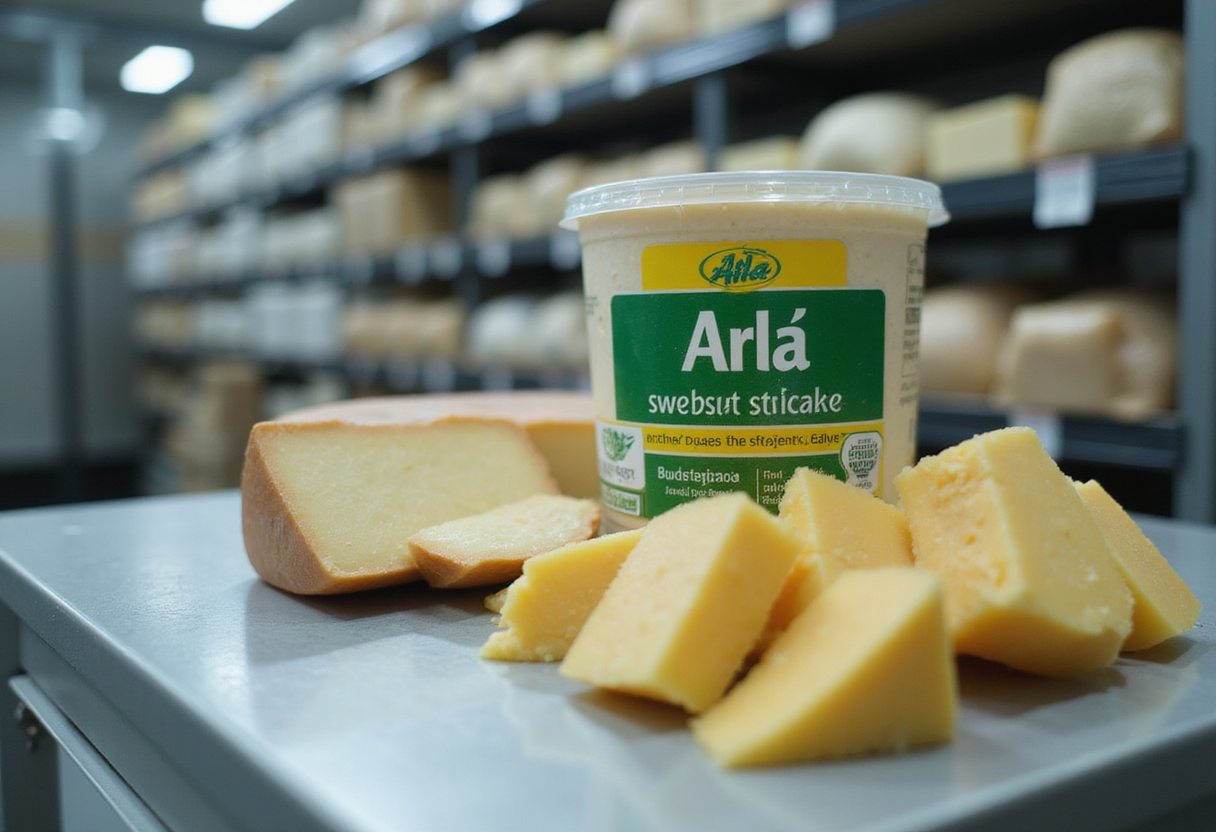
Arla Foods will shut its Falbygdens Ost import and packaging facility in Falköping, Sweden, in February 2027, cutting approximately 60 jobs. The farmer-owned dairy cooperative blames prolonged profitability challenges and declining demand for large parts of the site's speciality and dessert cheese range.
The plant on Göteborgsvägen occupies an unusual position in Arla's portfolio. Unlike the co-op's other dairy operations, Falbygdens Ost produces none of its own cheese and processes no milk supplied by Arla farmers. Its business is importing, storing, processing, portioning and packaging cheeses sourced from around the world. That made it a natural target when the cooperative reviewed where its capital works hardest.
Why is Arla closing the site now?
Arla frames the closure as part of a wider strategy to concentrate resources on Swedish dairy production and strengthen the country's food security. The move signals that the co-op's farmer-owners are prioritising domestic milk processing over a trading and repackaging operation with deteriorating economics.
Anna Schreil, head of logistics and production at Arla Sweden and Finland, said: "This is a heavy message for both our employees and the local community in Falköping. We have great respect for Falbygdens Ost's long history and for the people affected by the decision."
She continued: "At the same time, as a farmer-owned cooperative, we need to use our resources where they create the greatest long-term value for our owners. Therefore, we focus our investments and our operations on areas that contribute to more Swedish milk and strengthen Swedish food security."
The statement underlines the governance logic behind the decision: returns to member farmers, not volume in imported cheese, drive capital allocation.
What happens to the workers and the site?
The closure affects the import and packaging operations on Göteborgsvägen. Arla said it is working closely with trade unions to support affected employees, including opportunities both within and outside the company.
Arla will retain its Osthuset facility on Energigatan, where Swedish-produced hard cheeses are stored and waxed. Approximately ten jobs remain at that site, leaving the wider Falköping presence reduced but not eliminated.
For the local labour market, the loss of roughly 60 positions at a single food processing site represents a material hit, and union negotiations over redundancy terms will run through the run-up to the February 2027 closure date.
Which brands and products disappear?
The changes go beyond the plant itself. Arla will discontinue dessert cheeses sold under the Falbygdens brand, with products remaining available to grocery retailers until week seven of 2027. Retail buyers will need to plan shelf transitions around that deadline.
The range does not vanish entirely:
- Some of the most popular Falbygdens products transfer to Arla's Castello brand, keeping them in the portfolio under a stronger international label.
- Aged Swedish cheese varieties continue under the Kvibille brand, consolidating the domestic cheese offer within an established Swedish name.
The brand reshuffle shows Arla managing the exit commercially rather than simply withdrawing volume, protecting retail listings while cutting the cost base that supported them.
What does this signal for European dairy?
The decision fits a broader pattern among European dairy co-operatives: capital is flowing toward core milk processing and national food-security narratives, and away from ancillary import, storage and repackaging operations that lack farmer milk as their foundation. For suppliers who shipped cheese into Falköping for portioning and packaging, the closure removes a European route to the Swedish grocery market, forcing them to find alternative packing partners or direct supply deals.
For Arla, the reallocation releases resources it can direct toward Swedish production capacity, in line with the strategy Schreil described. Union consultations, redundancy support arrangements and the transfer of Falbygdens products to Castello will proceed over the coming months, ahead of the final closure scheduled for February 2027 and the retail cutoff in week seven of that year.
via FoodBev (Source)
More from Elena Vasquez
Show full bio
News editor covering marketplaces and e-commerce at Eurotables Report.
93 articles
Other tables tonight
- Nº 08Müller to close Rogätz sauce plant and Leppersdorf cheese lineNLOctober 10, 2026
- Nº 08Plant-Based Hits €16.3B in Europe, Still 2.4% of FMCG: CircanaDEOctober 10, 2026
- Nº 42Espresso House Eyes New European Expansion FrontDESeptember 29, 2026
- Nº 11Croatian Cafés, Restaurants, Hotels Face New EU Packaging Rules from AugustFROctober 10, 2026
- Nº 07RaboResearch Warns European Food Prices Will Keep Climbing to 2027ESOctober 10, 2026