DENº 46Restaurants & Dining
Michelin chef exits UK for overseas venues, citing tax-driven survival threat
A Michelin-credentialed UK chef is opening restaurants abroad to escape unsustainable domestic tax pressure, the Guardian reported, warning plainly: "Restaurants won't survive."
· 3 min at the table
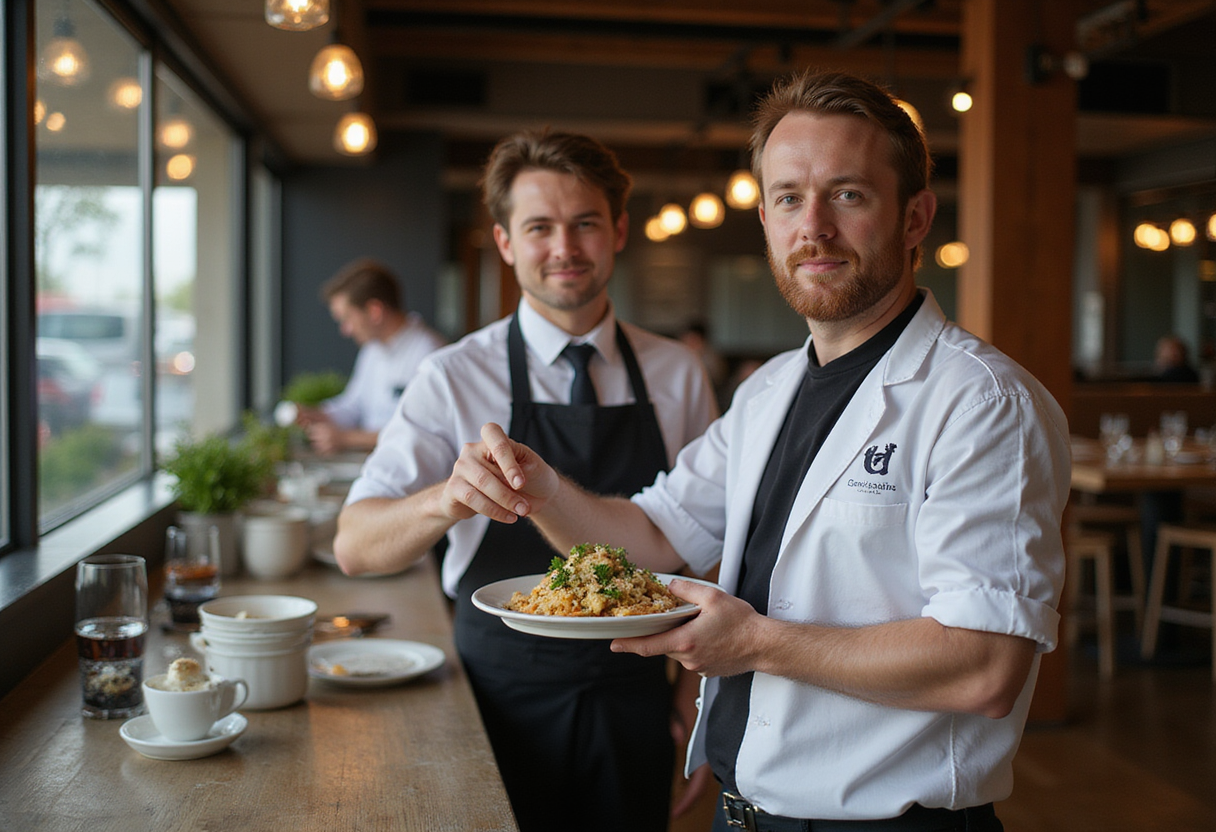
A Michelin-credentialed UK chef has begun opening restaurants outside the United Kingdom to escape what the operator describes as an unsustainable domestic tax burden, the Guardian reported. The chef's assessment is blunt: "Restaurants won't survive."
The redirection of new openings abroad marks one of the more prominent defections yet from a UK fine-dining sector already under severe margin pressure. For European hospitality investors, the move highlights how UK fiscal policy is reshaping the geography of starred-restaurant capital deployment, with the country losing competitive ground against overseas markets on tax-adjusted operating economics.
What the chef's move signals
The decision to launch international venues rather than expand domestically is a structural signal, not a cyclical one. Operators evaluating site economics across multiple cities will now compare after-tax margins between London and competing capitals, and the gap has widened enough to redirect growth-stage capital abroad. Fine-dining formats are particularly exposed because labour intensity runs highest in this segment, making payroll tax and minimum wage changes disproportionately impactful on unit economics.
For UK-listed and private restaurant groups, the chef's pivot will be read as confirmation of a directional shift. Several operators have already announced reduced opening hours, scaled-back expansion plans or closures of underperforming central London sites in recent quarters. The pattern now extends to the top of the market, where chefs previously maintained flagship UK venues as anchor operations.
Why it matters across European markets
Continental operators should view the displacement as an opportunity. International demand for high-end UK-credentialed chefs has historically driven bookings and premium pricing in gateway European cities. If a cohort of UK-based chefs follows this operator's lead, expect migration of tasting-menu concepts to international gateway cities, where commercial property markets have softened and tourism flows remain robust.
The development also affects the UK hospitality labour market. A reduction in new high-end openings reduces the pipeline of sommelier, chef-de-partie and front-of-house roles that traditionally trained the next generation of operators. UKHospitality and the Restaurant Association have called for fiscal intervention, including extended business rates relief and a permanent reduced VAT rate for eat-in hospitality, but no policy change has been signalled in the recent fiscal calendar.
The investment angle is becoming harder to ignore for hospitality-focused funds. UK-focused restaurant operating and property vehicles trading in London have seen valuations compress relative to European peers over the past 24 months, driven in part by operator-level margin erosion. Continued defections at the premium end reinforce the case for capital reallocation toward continental and international platforms with structurally lower tax friction.
For peer UK operators weighing their own international strategies, the chef's move provides cover. Public commentary from a Michelin-credentialed operator validates the calculus that overseas expansion is now a defensive necessity for margin discipline rather than a purely growth-driven choice. Expect the next round of UK restaurant group results to feature expanded international pipelines and revised UK capex guidance.
What to watch next
The first openings of the chef's overseas venture will provide the clearest market test. If international covers and average spend materially exceed UK benchmarks, expect further UK defections among starred operators before the next UK budget. Investors should monitor upcoming UKHospitality data releases, any Treasury consultation on employer taxation, and lease renewals at flagship London fine-dining addresses as the next data points on whether the outflow becomes structural.
via Google News: EU VAT restaurants (Source)
More from Grace Kim
Show full bio
Market editor covering consumer brands and retail at Eurotables Report.
69 articles
Other tables tonight
- Nº 31U.S. Restaurant Brands View UK as Top International Growth MarketESOctober 10, 2026
- Nº 47Top Chefs Warn UK Closures Threaten Restaurants and JobsESOctober 10, 2026
- Nº 29UK-EU trade deal: what it means for UK hospitalityFRSeptember 29, 2026
- Nº 04Europe named QSR menu innovation hub by Restaurant BusinessFROctober 10, 2026
- Nº 15FoodNavigator marks Brexit decade with 10-point F&B impact reviewDEOctober 10, 2026