ITNº 28Food & Beverage Trade
FSA and FSS publish export guidance for cell-cultivated foods
The FSA and FSS have published a nine-step export roadmap for GB cell-cultivated foods, classing them as Products of Animal Origin for non-EU market access.
· 3 min at the table
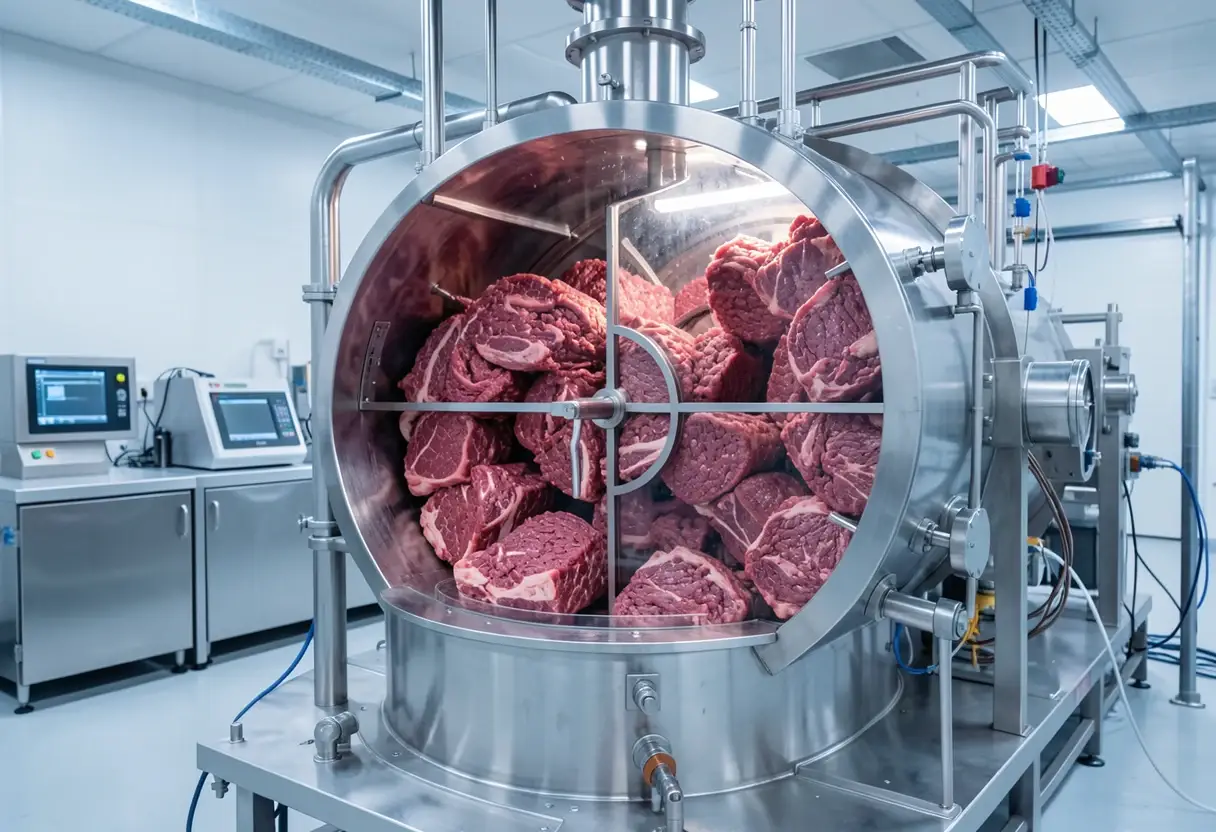
The Food Standards Agency and Food Standards Scotland have published export guidance that classifies cell-cultivated foods, including cultivated meat, as Products of Animal Origin for regulatory purposes in Great Britain.
The guidance, developed through the FSA and FSS Cell-Cultivated Products Sandbox Programme, sets out a practical roadmap for companies exporting cell-cultivated products from Great Britain to countries outside the EU. It responds to a structural gap: these products currently have no internationally recognised sanitary and phytosanitary classifications and no established export certification arrangements.
Thomas Vincent, deputy director of the Sandbox and Innovation at the FSA, said: "Businesses have told us that understanding the cross-government export process was a priority, so we have worked across government to explain the path to export cell-cultivated products from GB to non-EU markets. The market for cell-cultivated food is growing internationally, so this guidance will help companies understand what they need to do to access new markets and grow their businesses."
What must exporters do?
The roadmap lists nine practical steps. Companies must:
- Check the destination country's eligibility and market access
- Confirm their production establishment complies with GB food law and destination-country requirements
- Confirm product eligibility and SPS certification requirements
- Check whether they need an export health certification
- Submit a customs declaration
- Maintain temperature controls during transport
- Ensure labelling and packaging compliance
- Prepare a documentation package and ensure traceability
- Ensure dispatch and destination compliance once the consignment leaves Great Britain
Each step places the compliance burden on the exporter. The FSA and FSS make clear that companies themselves are responsible for checking product authorisation requirements in the destination country — whether that means a food marketing authorisation, a novel food approval, a GMO approval where applicable, a taste-trial approval or an equivalent.
Which agencies are involved?
The guidance consolidates export requirements from across government. Contributors include HM Revenue and Customs, the Animal and Plant Health Agency, the Department for Business, Innovation, Science and Trade and Defra. That cross-departmental scope was the pain point: businesses had told the regulator that mapping the process across multiple agencies was their main barrier.
The Sandbox Programme, which produced the guidance, exists to give cell-cultivated product companies a structured route through a regulatory framework built for conventional foods. The new document extends that work from domestic authorisation to international trade.
Does the guidance guarantee market access?
No. The FSA emphasised that the guidance will not guarantee market access for any given country. Approval depends entirely on the laws and import conditions of each destination jurisdiction. What the document does is remove uncertainty about the GB-side process: which checks, certificates and declarations an exporter must complete before a consignment leaves Britain.
For start-ups without in-house regulatory teams, the agencies frame the guidance as a map of the export path rather than a licence to sell. Established operators gain a single reference point replacing scattered requirements across four government bodies.
The full guidance is available via the FSA and FSS website. Companies planning non-EU exports can now benchmark their compliance against the nine-step roadmap while awaiting market-specific authorisation decisions in each destination country.
via FoodBev (Source)
More from Tom Whitfield
Show full bio
Senior reporter covering companies, deals and strategy in European hospitality industry at Eurotables Report.
128 articles
Other tables tonight
- Nº 39UK-EU SPS draft targets lower barriers and fresher supplyITNovember 4, 2026
- Nº 47UK labs cannot test what EU imports now require, industry warnsNLOctober 10, 2026
- Nº 36Health groups urge EU to shield ultra-processed food study from industry inputESOctober 10, 2026
- Nº 41EU packaging guidelines leave food industry concerns unresolvedFRSeptember 29, 2026
- Nº 30EU Council and Parliament strike safeguard deal for Mercosur agri-food importsDEOctober 10, 2026