ITNº 03EU Policy & Regulation
France Proposes Extending Sugar Tax to Ultra-Processed Foods
France's 2027 budget would extend the sugar tax to ultra-processed foods on a sliding scale, as FEB counters with a voluntary 5% sugar cut by 2031.
· 3 min at the table
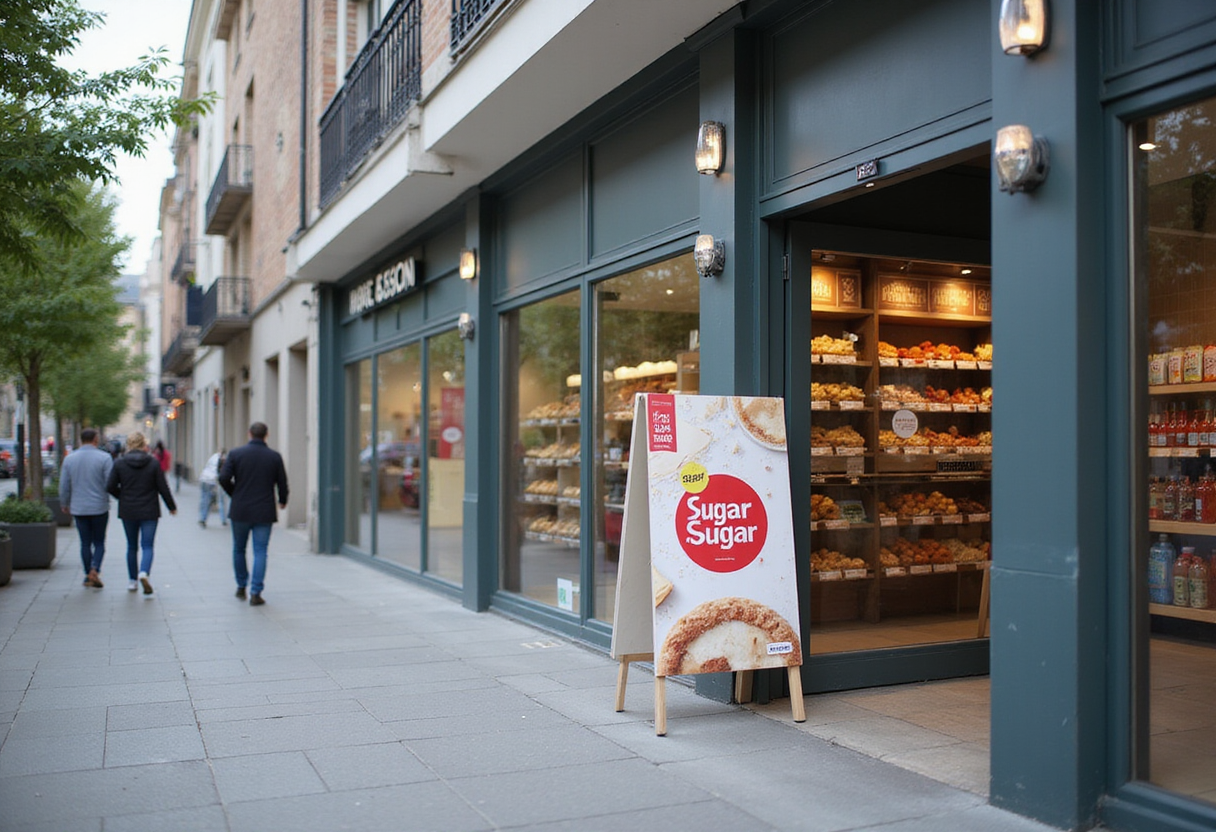
France's 2027 budget proposes extending the sugar tax from sweetened drinks to high-sugar processed foods, triggering immediate opposition from the Fédération des Entrepreneurs de Boulangerie (FEB), whose members face a new sliding-scale levy on pre-packaged patisserie and viennoiserie products.
The government's budget document states that 40% of adults and 80% of children in France consume too much sugar, and that consumption of processed foods has risen 170% since the 1980s. It identifies industrially processed foods containing additives — ultra-processed foods, or UPFs — as major contributors to excessive sugar intake and to chronic conditions including diabetes and cardiovascular disease.
The levy would operate on a sliding scale based on sugar content. The government said it aims to safeguard "high-quality food produced by our farmers, as well as artisanal products".
Why does FEB oppose the extension?
Paul Boivin, director general of FEB, told FoodBev: "Reducing excessive sugar consumption is a major public health priority. Manufacturers of bakery and patisserie products have a responsibility to contribute, and we accept that responsibility."
But the federation rejects the tax itself. Its members have worked for more than a year with the Ministry of Health and the Ministry of Agriculture on a voluntary agreement covering industrial pastries and viennoiseries. That agreement, now being submitted, targets a reduction of at least 5% in the average sugar content of members' product ranges by 2031 — what Boivin called "actual sugar reduction" without compensating with substitutes or additives.
Boivin argued that taxing products without crediting existing reformulation efforts "sends a contradictory message". He added: "A tax alone does not guarantee a lasting improvement in diets. It is dishonest to suggest otherwise in an attempt to justify a tax in disguise."
He raised three specific concerns for operators:
- Small and medium-size enterprises lack capacity to invest, facing extra costs on top of recipe development, production trials and product testing.
- The levy "would create an uneven playing field between pre-packaged products and products sold loose" — comparable products with identical sugar content could be treated differently purely on packaging and sales format.
- Sugar plays functional roles in texture, appearance and shelf life, so reformulation risks degrading quality.
"The risk is that the tax absorbs resources needed to achieve these changes," Boivin said. "Businesses could have to absorb the cost through lower margins or pass some of it on to consumers."
How does the French plan fit the European picture?
Sugar legislation has broadened across Europe over the past decade, though most levies still target beverages rather than food. If France's extension passes, it would move beyond that pattern.
The UK government announced plans last year to extend its Soft Drinks Industry Levy to additional categories including dairy drinks and RTD coffees. It also lowered the sugar threshold from 5g to 4.5g per 100ml, giving manufacturers until 1 January 2028 to reformulate or pay. Average sugar content of in-scope drinks has dropped almost 50% since the levy's introduction in 2018. London has not extended the levy to food, but a UK report published last March called for a new sugar and salt tax on industrially processed foods such as biscuits, breakfast cereals and crisps. Lead author Chris Hilson of the University of Reading called legislative extension "vital" for public health.
Poland has proposed expanding its sugar tax to cover more beverage formats, including concentrates and ready-to-drink dietary supplements, with effect from 1 January 2027 if approved. Germany has proposed a new soft drinks sugar tax from 2027 — a year earlier than the 2028 timetable previously floated — and manufacturers, including more than 300 beverage companies that signed an open letter opposing the tax, warn the accelerated schedule leaves too little preparation time and carries significant financial consequences.
For European hospitality and foodservice operators, the French proposal signals a widening cost base: patisserie suppliers, café chains and retailers stocking pre-packaged bakery lines face either reformulation investment, margin compression or price pass-through. The fate of the 2027 budget measure, and of FEB's voluntary 5%-by-2031 alternative, will be decided in the coming parliamentary negotiations over the budget bill.
via FoodBev (Source)
More from Elena Vasquez
Show full bio
News editor covering marketplaces and e-commerce at Eurotables Report.
91 articles
Other tables tonight
- Nº 36Health groups urge EU to shield ultra-processed food study from industry inputESOctober 10, 2026
- Nº 21Parliament Magazine: EU must overhaul food system to stay competitiveFROctober 10, 2026
- Nº 37ING Think weighs GLP-1 demand risk for European food operatorsDEOctober 10, 2026
- Nº 19French private equity firm targets German bakery-café marketESOctober 10, 2026
- Nº 39Europe ramps up food-industry pressure on obesityDEOctober 10, 2026