NLNº 24Hotels & Groups
EHL Study Maps Global Destination Network Across 217,686 Trips
EHL researchers mapped 217,686 trips across 39,901 cities in 195 countries, finding hub-dominated, scale-free tourism networks with diameters of 14 to 25 stops.
· 3 min at the table
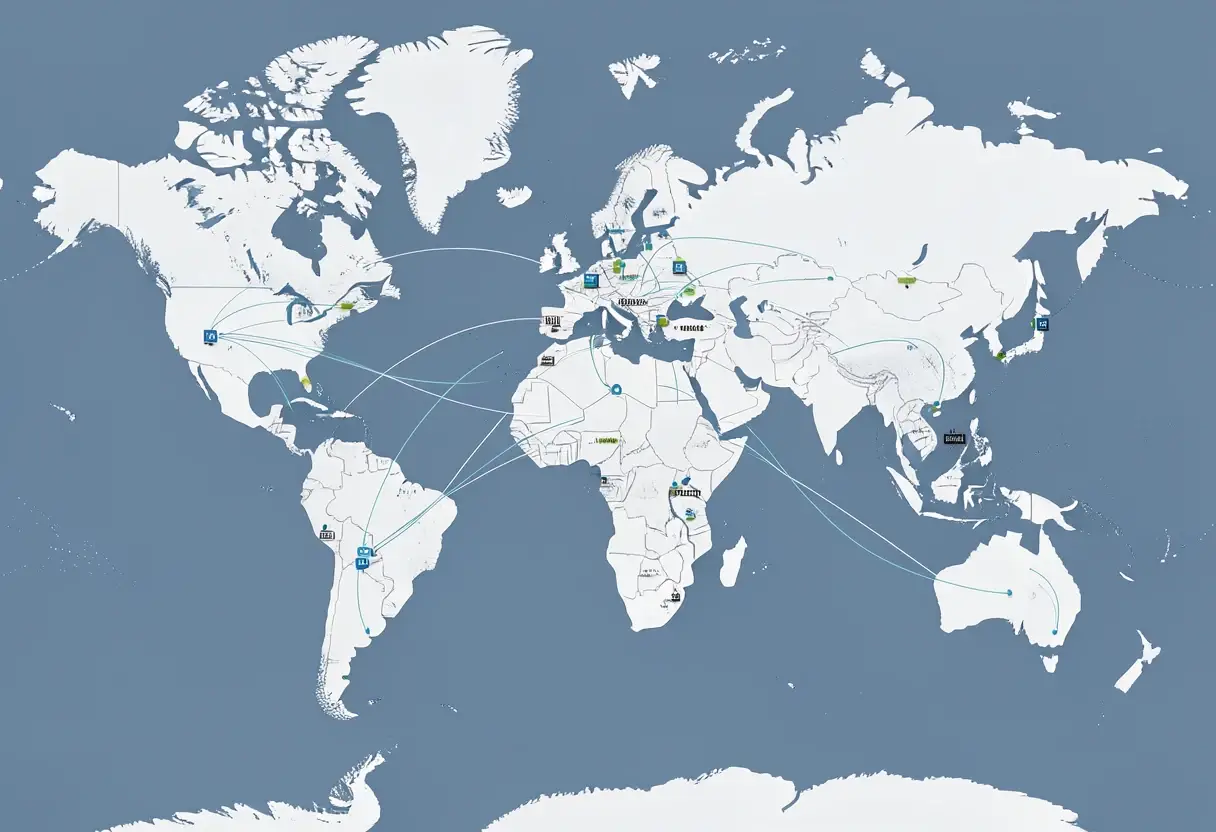
An EHL Hospitality Business School study has mapped the world's tourist destination network using 217,686 distinct trips taken by 200,153 travellers across 39,901 cities in 195 countries. Researchers Yong Chen and Giuliano Bianchi built the model from hotel reservation data published by Booking.com in 2021, the largest and most complete global trip dataset to date.
The reservations span December 31, 2015 to February 28, 2017 and cover departures from five origin countries. The network these trips form carries commercial weight: global tourism generates over 1.5 billion annual international visits and $1.9 trillion in expenditure, according to UN Tourism.
What does the mapping show?
The study finds none of the five destination networks is fully connected. Each contains disconnected components, meaning tourists are effectively "trapped" in local networks. The extreme case is bilateral tourism: two cities serving as each other's sole destination.
Yet the largest components dominate. They account for between 96.0% of cities, or 6,720, in the Bartovia network and 99.8%, or 10,625 cities, in the Devil Fire Empire network. The largest strongly connected components, where a tourist can reach any city from any other city through directed paths, range from 76.5% (3,101 cities) in the Techerkistan network to 96.0% (6,719 cities) in the Bartovia network.
In the Techerkistan network, any tourist can reach each of the remaining 3,100 cities in sequence without interruption. The researchers note this implies abundant transport and accommodation supply making multi-city trips physically and economically feasible.
Where are the hubs?
The networks show a robust scale-free property: the number of cities falls sharply as their connections rise. Each city connects on average with between 4.4 cities in the Bartovia network and 10.2 in the Gondal network. Maximum connections run from 176 cities in Bartovia to 708 in Gondal.
This concentration produces hub cities that function as both destinations and gateways. A hub reaches all other cities in one or a few connections, so path lengths from hubs run far shorter than those between peripheral cities. The hubs need not be geographically central; they are central in accessibility terms. All cities are anonymised in the dataset, so the researchers cannot name them.
Why do networks stretch so long?
The destination networks exhibit what the authors call a "big-world" phenomenon. Their diameters, the longest shortest paths between connected cities, range from 14 in the Techerkistan and Devil Fire Empire networks to 25 in the Elbonia network. Simulations show these diameters run two to three times those of comparable simulated networks.
A tourist departing from any first city needs at least 14 to 25 stops to reach a randomly chosen city. The pattern inverts the "six degrees of separation" small-world structure of social networks. The authors explain the difference: social networks reward minimised connections, while tourists seek novelty.
"Many expect to visit a sequence of cities that are geographically and/or culturally distinct so as to enhance the novelty and excitement of their overall travel experience," the study states. The search for novelty, rather than familiarity, leads tourists toward peripheral cities less visited and not directly connected to hubs.
Why the network matters for operators
The study argues that understanding connections between destinations gives hospitality businesses a richer picture of tourism flows than individual stays provide. Where a destination sits within a wider journey shapes the revenue captured along the way. "Understanding the connections between destinations can ultimately help hospitality businesses and destinations think beyond individual stays towards the broader journeys travelers make," the authors conclude.
The scale-free evidence also feeds the wider research debate: the findings add tourism to the Internet, the Web, citation networks and biological networks as documented scale-free systems. EHL Group, founded on expertise dating to 1893 and operating campuses in Switzerland and Singapore, has positioned the work as a first global-level baseline. Further research building on non-anonymised data could eventually name the hub cities that this study can only locate structurally.
via research.ehl.edu (Original)
More from Elena Vasquez
Show full bio
News editor covering regulation, policy and their impact on European hospitality industry at Eurotables Report.
155 articles
Other tables tonight
- Nº 44WTTC's New Indices Rank 184 Countries on Tourism Quality, Not Just ArrivalsDENovember 17, 2026
- Nº 01WTTC Urges Eight Reforms to Keep Europe Ahead in TourismDEOctober 12, 2026
- Nº 40GlobalData Maps the Next Wave of Hotel SupplyFROctober 19, 2026
- Nº 32European hotel values stall at 0.2% growth in 2025, HVS index showsESOctober 10, 2026
- Nº 15European Tourism Resilient in Early 2026, Hotel Online ReportsFROctober 10, 2026