ESNº 28Food & Beverage Trade
Cargill commits €56m to Belgian food supply expansion
Cargill will invest €56 million in Belgian processing capacity, strengthening European food supply chains serving bakeries, QSR chains, ready-meal makers and confectionery buyers.
· 3 min at the table
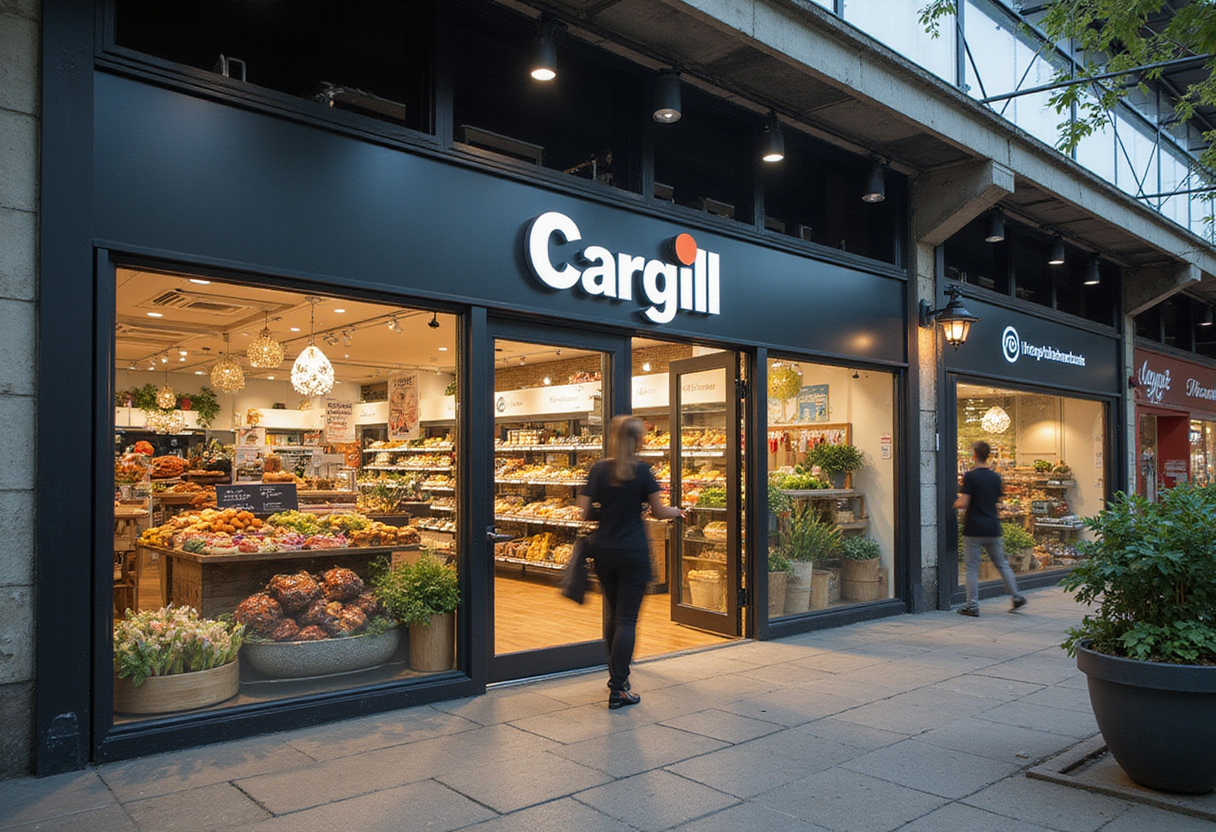
Cargill will invest €56 million in a Belgian expansion designed to strengthen European food supply chains, according to Food and Drink Technology.
What does the investment cover?
The US-headquartered agri-food group is directing the capital into additional processing capacity in Belgium. The country historically anchors Cargill's North-West European operations across starches, sweeteners, cocoa derivatives, vegetable oils and animal nutrition.
Cargill, privately held and family-controlled, does not disclose European segment capex. The Belgian figure is therefore a rare discrete data point for analysts tracking agri-processing margins and a useful calibration against peer disclosures from ADM, Bunge and Louis Dreyfus.
Why does Belgium matter for European hospitality?
Belgium sits at the intersection of Cargill's European logistics. Road, rail and Antwerp-bound shipping corridors feed UK, French, German, Dutch and Nordic customers from Belgian plants.
Downstream hospitality users include:
- Bakers sourcing starches and cocoa powders for pastry lines
- QSR chains drawing on sauces, oils and lecithins for frying and coating
- Ready-meal processors using seasonings, stabilisers and binding agents
- Confectionery manufacturers dependent on cocoa derivatives
These inputs flow into menu items from sandwich bread and croissant dough to chocolate toppings, frying oils and dessert fillings served across hotels, restaurants and quick-service counters.
How does the move compare with peers?
ADM, Bunge and Louis Dreyfus operate across similar commodity categories in Europe. The Belgian commitment signals that Cargill continues to prioritise continental capacity over incremental North-American build-out.
The investment lands as European processors reassess footprint after two volatile agri-input years. Cocoa, vegetable oil and starch markets have all moved outside their 2018-2022 trading bands. Cargill's domestic capacity addition suggests it expects demand from European customers to absorb incremental volume at acceptable margins.
What backdrop frames the decision?
Cocoa contracts have tightened on West African supply shortfalls. Vegetable oil pricing has swung with EU biofuel mandate revisions. Wheat-derived starch demand has shifted with ethanol economics and bakery reformulations tied to sugar-tax regimes.
Additional local processing capacity can ease specific bottling, storage and refining constraints. It will not reset continental commodity benchmarks in the short term. For hospitality operators, the practical effect is more reliable inbound supply rather than direct cost relief.
What should operators expect?
Continuity rather than price relief. A €56m commitment is meaningful at a single Belgian site, but modest against Cargill's wider European asset base, which spans multiple plants and joint ventures across the continent.
Existing supply contracts, indexed pricing clauses and quarterly renegotiations will remain the primary levers for operator cost management through 2025 and 2026. Procurement teams should not expect the announcement to materially shift ingredient cost curves in the coming quarters.
What remains unconfirmed?
The Food and Drink Technology headline does not specify:
- The Belgian site
- The construction start date
- The commissioning timeline
- The staffing headcount
- The product line prioritisation
Until Cargill publishes further detail or Belgian regional press fills the gap, the €56m should be read as a directional commitment rather than a fully scoped project. Operators awaiting site-level confirmation should track Cargill's regional trade-association communications and Belgian industrial permitting filings through the coming quarters. The next concrete disclosure window is likely Cargill's regional corporate-update cycle.
via Google News: restaurant industry Europe (Source)
More from Olivia Hart
Other tables tonight
- Nº 11Bagelstein targets UK entry into Europe's eating-out marketNLSeptember 30, 2026
- Nº 08Plant-Based Hits €16.3B in Europe, Still 2.4% of FMCG: CircanaDEOctober 10, 2026
- Nº 04Europe named QSR menu innovation hub by Restaurant BusinessFROctober 10, 2026
- Nº 19French private equity firm targets German bakery-café marketESOctober 10, 2026
- Nº 21Parliament Magazine: EU must overhaul food system to stay competitiveFROctober 10, 2026